Style Guide
Inspired by json.blog’s style guide and, in turn, The Frugal Gamer , a (not so1) comprehensive listing of all possible styles and elements on this site.
The site runs the CyberLavandaTea theme (v1.4.0): dark only, two accent hues (a green and a blue), display headings in Audiowide, body text in Rajdhani.
Heading 1
The display face at its largest. Each heading level has its own voice, not just a smaller size, so the hierarchy reads at a glance.
Heading 2
Still the display face, one step down, with a hairline underneath and a short green segment at its start. Inside a post it opens a section, so it also works as a divider.
Heading 3
Switches to the body face, bold, in green: a sub-section title that stands out from the paragraph without competing with the h2 above it.
Heading 4
A mono, uppercase, letter-spaced label in grey, prefixed with a green //, like a comment tag in a config file.
Headings get an id and, on hover, a ¶ anchor link to that section.
And now, for the text content, which is the most important part of the blog.
Content
Paragraphs
In a hole in the ground there lived a hobbit. Not a nasty, dirty, wet hole, filled with the ends of worms and an oozy smell, nor yet a dry, bare, sandy hole with nothing in it to sit down on or to eat: it was a hobbit-hole, and that means comfort. It had a perfectly round door like a porthole, painted green, with a shiny yellow brass knob in the exact middle. The door opened on to a tube-shaped hall like a tunnel: a very comfortable tunnel without smoke, with panelled walls, and floors tiled and carpeted, provided with polished chairs, and lots and lots of pegs for hats and coats — the hobbit was fond of visitors. The tunnel wound on and on, going fairly but not quite straight into the side of the hill — The Hill, as all the people for many miles round called it — and many little round doors opened out of it, first on one side and then on another. No going upstairs for the hobbit: bedrooms, bathrooms, cellars, pantries (lots of these), wardrobes (he had whole rooms devoted to clothes), kitchens, dining-rooms, all were on the same floor, and indeed on the same passage.
Lists
- Unordered List 1
- Unordered List 2
- Nested list 1
- Nested list 2
- Ordered List 1
- Ordered List 2
List markers look like CLI output, not book-style bullets: a green ▸ for unordered lists and zero-padded indices (01, 02…) for ordered ones, both in the mono face.
Footnotes
Footnote references2 use the same treatment as ordered lists: a green, mono, zero-padded number. So the 01 in the text matches the 01 in the footnote list at the bottom of the page.
In-line styles
Bilbo Baggins: Good morning!
Gandalf: ( leaning on his staff ) What do you mean? Do you wish me a good morning, or mean that it is a good morning whether I want it or not; or that you feel good this morning; or that it is a morning to be good on?
This is a link .
You can also write some inline code when you need it.
Links
Links are blue. A visited link
turns sage green, and on hover every link goes green. External links open in a new tab and get a ↗ marker.
Images
A block image is centered inside a <figure>; the title, if present, becomes the caption.
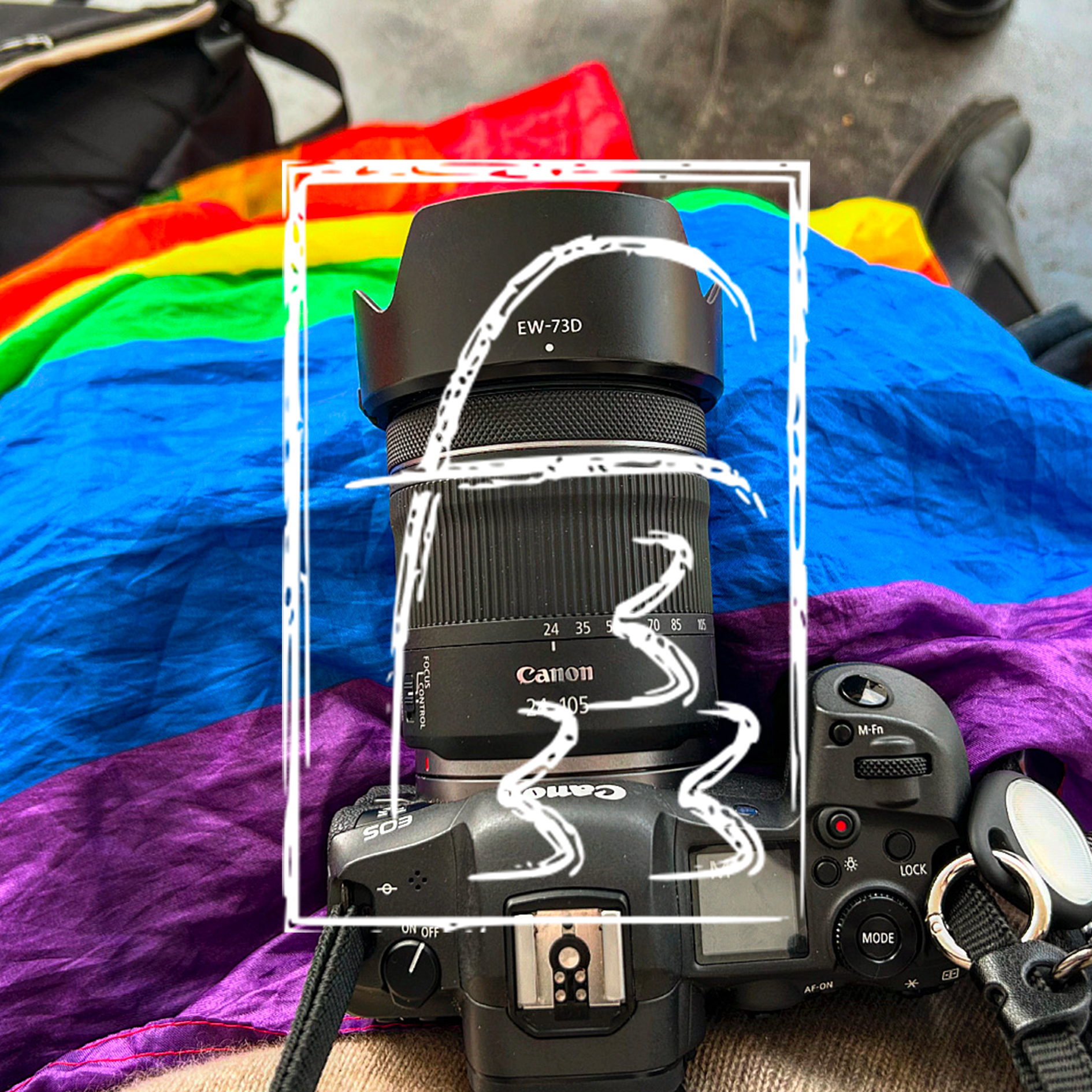
To center a raw <img> outside a figure, add the center-img class.
Block Styles
Quote
“I wish it need not have happened in my time,” said Frodo. “So do I,” said Gandalf, “and so do all who live to see such times. But that is not for them to decide. All we have to decide is what to do with the time that is given us.”
Blockquotes have a green left border on a slightly lifted surface. There are no separate “note / warning / caution” callout boxes — a quote is a quote.
Tables
I don’t really use tables much, but here’s one anyway. Rows alternate with a faint tint and the whole thing sits inside a scroll container when it’s too wide.
| Column 1 | Column 2 | Column Blue |
|---|---|---|
| Left Text | Centered | 22.50 |
Code
Code is also rare on the blog, though it’s a big part of my “day life”. Here’s a bit of Python. Syntax highlighting stays inside the two accent hues: keywords are green, strings blue, function names a lighter blue, numbers a lighter green, comments grey.
from pathlib import Path


def read_calibration(file_path: str) -> list[str]:
    return Path(file_path).read_text().splitlines()


def find_numbers(line: str) -> list[str]:
    return [char for char in line if char.isdigit()]


def combine_first_and_last(numbers: list[str]) -> str:
    if not numbers:
        return "0"
    return numbers[0] + numbers[-1]


def sum_lines(lines: list[str]) -> int:
    return sum(int(line) for line in lines)
Gear lists
The Uses
page doesn’t use plain lists: each group of gear comes from a data file and is drawn by a uses shortcode, in one of three shapes.
Kit
A panel on the left and a numbered spec list on the right, like a camera body and its lenses. The first item is the “body”, set in the display face; the others are its accessories. Each one can carry a small green tag (BODY, ZOOM, EXT…). The panel can be a product photo, a mosaic of photos, or, when there’s nothing to photograph, a big green glyph with a mono caption:
On narrow screens the panel moves above the list.
Chips
For things that don’t need a picture: compact pills, with the tag as a prefix.
Cards
A grid of photo cards where the whole card is the link. On hover the card lifts, its border turns green and the photo zooms slightly. A card without a photo shows the item’s initial on a faint green glow.
All three reuse the same tokens as the rest of the site, so they stay inside the two accent hues. Hover effects only apply with a mouse, and they switch off when the system asks for reduced motion.
Color Guide
The theme is dark only. Six semantic roles, plus surfaces derived from Content by opacity — nothing else in the site chrome.
| Role | Token | Hex |
|---|---|---|
| Primary (green) | --color-primary | #5FD88F |
| Content | --color-content | #E6E6EC |
| Links (blue) | --color-link | #4D9FFF |
| Visited (sage) | --color-visited | #7EA88E |
| Background | --color-background | #14151A |
| Inactive | --color-inactive | #8B8F9A |
| Surface (derived) | --color-surface | #25262B |
| Border (derived) | --color-border | #313237 |
| Surface hover (derived) | --color-surface-2 | #2D2E33 |
Syntax highlighting palette:
| Token | Hex |
|---|---|
| keyword / operator | #5FD88F |
| string | #4D9FFF |
| function / class | #A8C9FF |
| number / constant | #8FE0AF |
| comment | #8B8F9A |
| error / removed line | #FF6F6F |
Type:
| Use | Family |
|---|---|
| h1, h2, links, bold, footer | Audiowide |
| Body text, h3 | Rajdhani |
| Code, list markers, footnote refs, h4 | mono stack (SF Mono / JetBrains Mono…) |
| “Written by a human” signature | Ocean Trace |
Written by a human
Reference this post
Please reference this post with a link to this page. I prefer to be called Fundor333 (he/him) or Fundor333' Blog.